

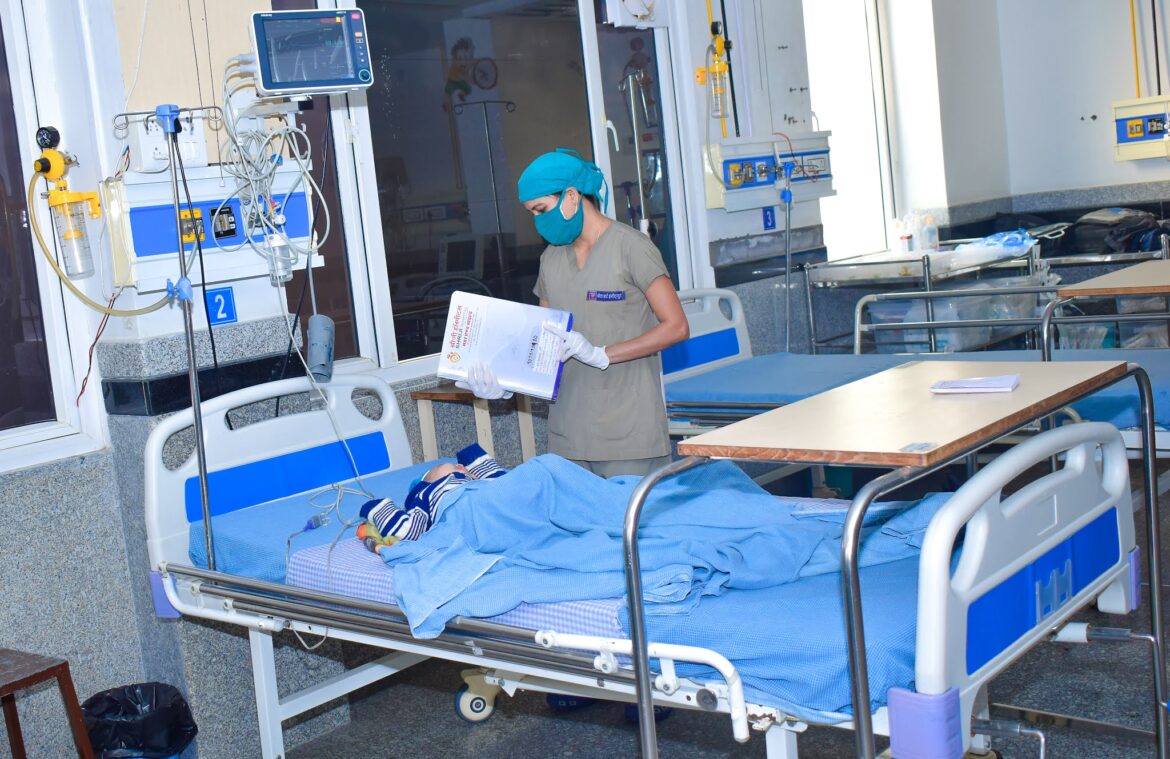
Before your little one arrives, a great deal of preparation needs to be done, and choosing the right Paediatrician is one of the things you need to do. A Paediatrician is a medical doctor who specialises in the physical, behavioural and mental health of children right from birth till the age of 16. Paediatricians are trained to diagnose and treat a broad range of childhood-related illnesses and are thus, crucial to your little one’s health care.
While a regular physician can provide regular health care and treatment, the needs and requirements of a child are often specialised. Therefore, it is essential that your young one is given specialised care and services that are specifically dedicated paediatric services. Our paediatricians at Shriji Hospital have specialised training in the fields of physical, emotional and behavioural needs of children. We also train our paediatricians to recognise and treat childhood illnesses and infectious diseases which regular medical care professionals may not be able to treat. In an event where your child needs specialised paediatric care due to a premature birth or any other health condition in the period just after birth, our qualified Neonatologists are well equipped to monitor and offer even more specialised care.
PICU
Babies and infants are the most vulnerable population and thus require special medical assistance throughout their early years of development. They are fragile and hence it can be intimidating for you as a parent to ensure that everything goes right.
What is a Neonatal Intensive Care Unit (NICU)?
Newborn babies make several adjustments (physically) once they leave the mother’s womb. While they are inside the womb, they rely on the mother’s blood supply from placenta (a temporary organ that connects the developing fetus and provides oxygen & nutrients to the fetus). However, that’s no longer the case once they are delivered out.
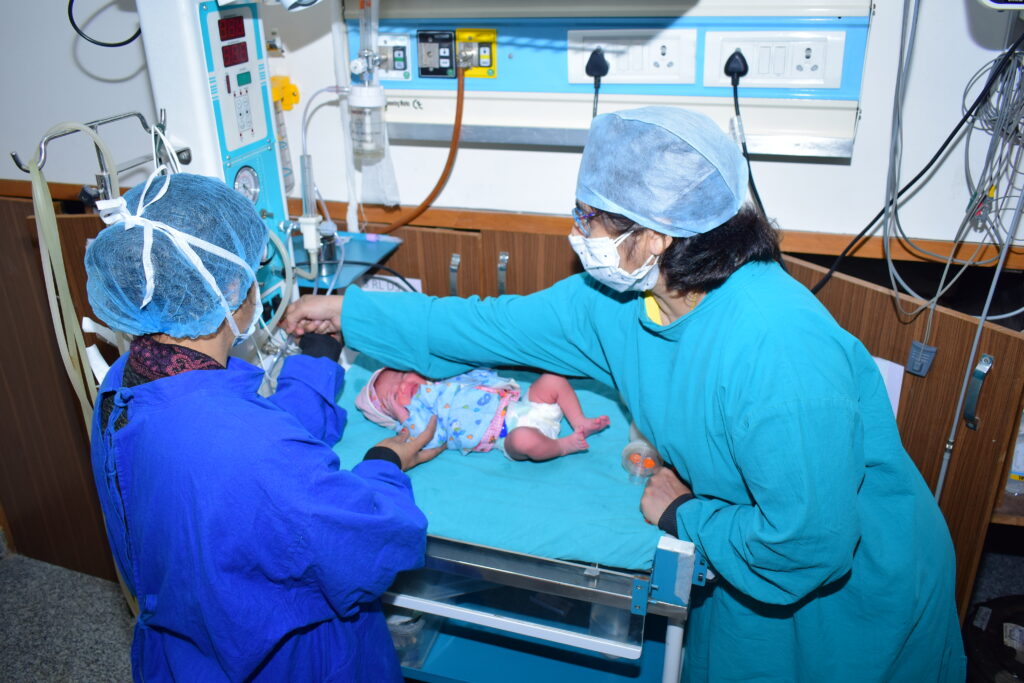
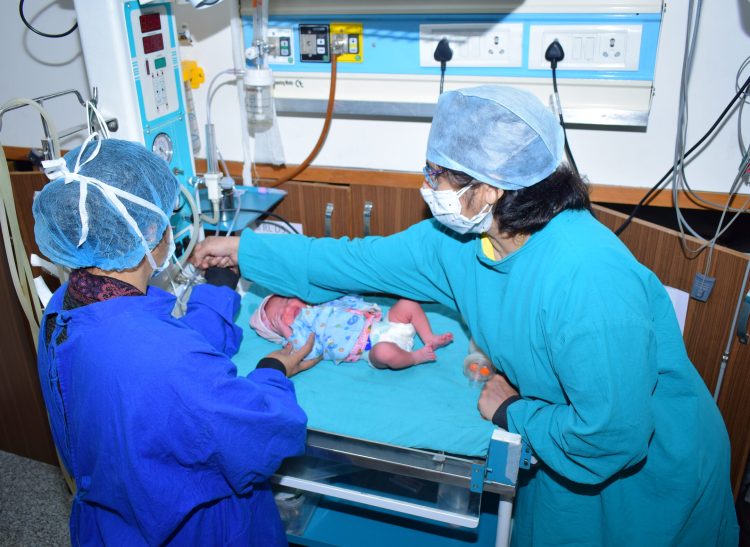
Thus, the babies that need intensive medical care are put in the dedicated neonatal ICU units. Each of these specialized NICU units is equipped with advanced technology and have trained and well-experienced professional doctors to assist and provide special care to these little ones. NICUs are designed not only to take care of the sick babies but even those that require specialized nursing care.
It’s always better to get your child get delivered at the hospital with any NICU facility in case of any complications in a delivery you can rest assured of proper medical care in case something goes wrong with your newborn child. Moving them out of the hospital is always riskier and must be done with extreme caution.
Every newborn is different from each other, and hence, the healthcare professionals must assess their symptoms, physical health, etc. to determine if the baby needs NICU care or not. The following factors (listed below) can place your baby at a higher risk and increase their chances of being admitted to the NICU.
The factors include:
- Drug or Alcohol abuse
- You have multiple pregnancies (twins, triplets, etc.)
- Excess or lack of amniotic fluid (a protective fluid that safeguards the fetus)
- Premature rupture of membranes (amniotic sac)
- Emergency Cesarean delivery
- Lack of oxygen changed baby’s organ systems (a condition called as birth asphyxia)
- Premature baby
- Anamolies defected during pregnancy scans
- Elderly mother
- Mother with associated medical complications like thyroid, diabetes, etc
- Any high risk pregnancy
In a general scenario, babies usually discharge out from the NICU within 48- 72 hours depending on their critical condition . However, they are readmitted in case they show signs of an infection, jaundice, poor weight gain, or any other health ailment.
Why Shriji for Neonatal care?
Neonatal Intensive Care Units (NICU) at Shriji hospitals provide specialist – specialized care to premature and unwell new-borns. The neonatal intensive care units are manned by a highly trained team of neonatologists, nurses and other medical professionals. The neonatal ICUs are designed to provide maximum safety, comfort, and medical care to the infants. The NICU is used in cases such as —
- Premature birth
- Extremely low birth weight
- Major birth defects
- Neonatal jaundice
- Infant respiratory distress syndrome
Different Levels of care at NICU
Getting your child admitted to a hospital can be a scary experience for every parent especially if it’s the case of newborns. As most of the hospitals provide only basic care to the babies, you must run a background check on each hospital before admission.
As stated earlier, transferring the babies to other hospitals (with basic facilities and dedicated NICU departments) post-birth can be trickier and risks making them prone to myriad forms of infections. Your baby gets the best possible and near-equal care and attention in the NICU, yet each of them offers different levels of care.
Let’s check out the levels of care for each in this segment.
NICU Levels
Similarly, like PICU, even NICU levels of care are split into 3 different categories depending on the type of care needed by the infants. The levels are as follows:
- Level 1
- Level 2
- Level 3
- Level 1: This level of care gets applicable to the newborn if its weight is more than 1800 grams or has a gestational maturity (no of weeks of the pregnancy) of 34 weeks or more.
- Level 2: In this level, the weight of the newborn should fall in the range of 1200 – 1800 grams and should have a gestational maturity of at least 30 weeks, with it not being more than 34 weeks.
- Level 3: It’s the highest level of NICU care and caters to those newborns who weigh less than 1200 grams and have their gestational maturity less than 30 weeks.